
Projects


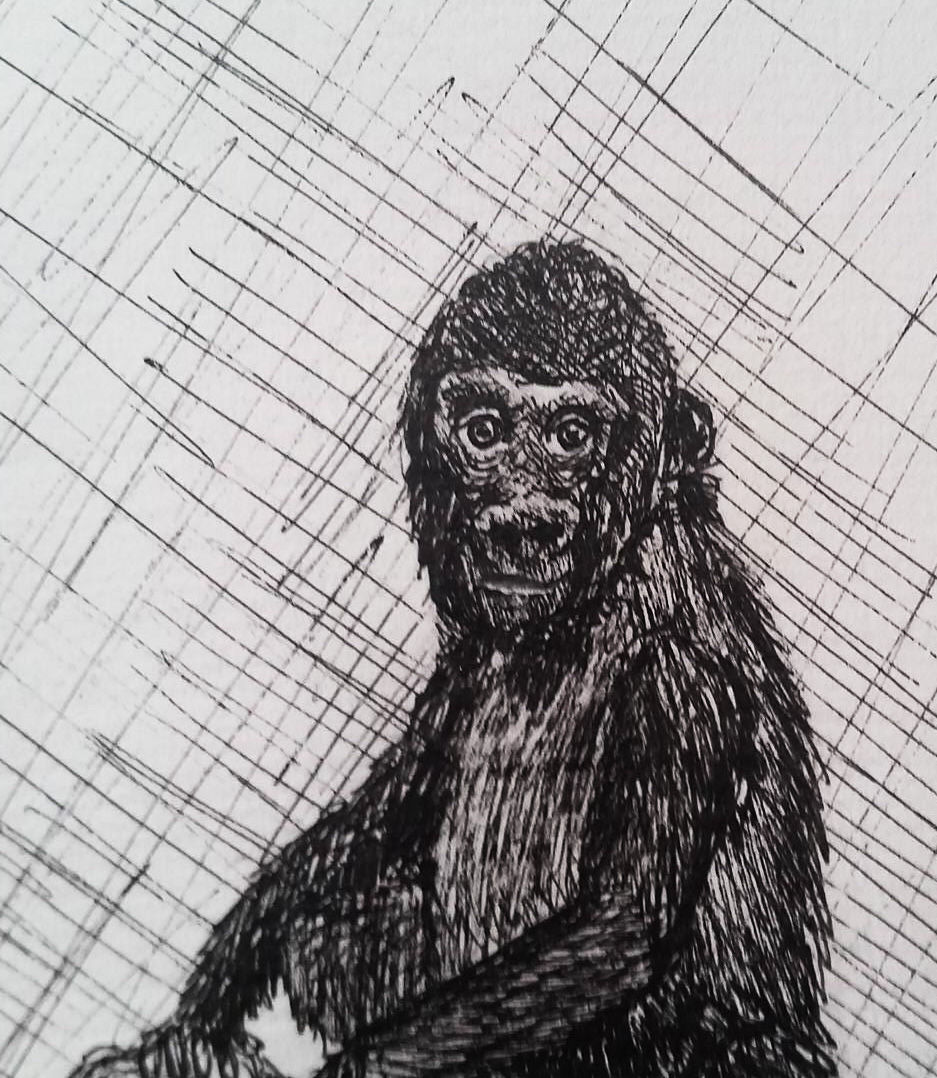


The Hunt, Pen drawings on paper in hand-made book, 8.5 x 11" each page, 2015.
The Hunt (2015) is a hand-made, one-of-a-kind artist book concerning poaching of animals. For many different reasons, animals are illegally hunted. Often, these species are or have been endangered. Each page features drawings of these animals, ranging from the bighorn sheep (hunted for its horns) to sharks (whose fins are cut off, leaving them immobile and bleeding). This piece uses confrontational imagery and minimal text to raise awareness of the ways animal righs are violated by poaching around the world.
. . .


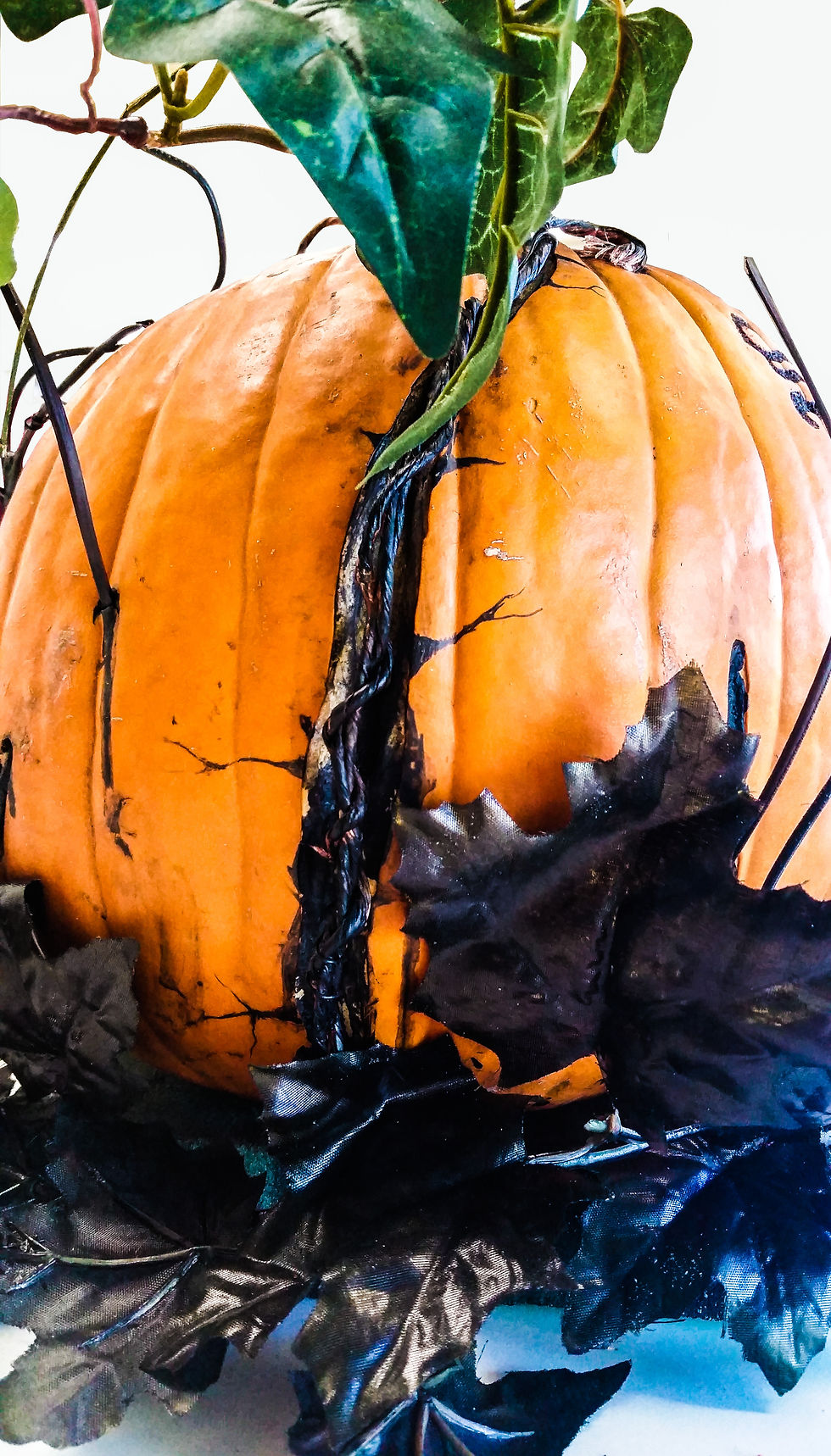


Still Mine, Mixed Media including live pumpkin, ink, and fake foliage, approx. two feet tall, 2015.
Still Mine (2015) deals with the fine line between nurturing and stifling. Duality and the simultaneous embodiment of two or more "opposites" is one of the artist's points of departure starting with this project. In this piece, the live pumpkin was tattooed (manually via needle and india ink) with the words "Still Mine" and a geometric/floral (another duality) image drawn from the artist's own tattoo. This pumpkin is nestled on black leaves and vines, which are climbing their way up the body. These vines cut deep into the pumpkin flesh and fill it with poison, though the vines are still what gave the pumpkin sustenance.
. . .


Oculus Dei (Eye of God), Mixed Media including paper, cardboard, acrylic, and metallic twine., approx. 16x16x16", 2016.
Oculus Dei (2016) is a 3D painting. Each hexagonal facet looks like stained glass; each pentagonal facet has a painting of an anatomical heart from a different angle corresponding to the angle of the facet on the piece. Every shape is framed by gold string. The concept is human achievement and human limit: each heart is the view of a single person at a single time. However, the eye of a god would see all angles simultaneously. The piece has a religious feel with the stained glass, geometry, wonder of the heart, and extravagence.
The Angels, collage, acrylic, and staples on canvas. See "Painting" section for details. 2016.
The Angels (2016) has paintings of statuesque angels in grey over printouts of famous Western paintings. Staples puncture the images. Angels, usually messangers or protectors with a beautiful, innocent glow, are dark and eyeless. The foreboding images cover recognizeable artworks from across the centuries of Western art. The angels are guardians, but they are guarding a status-quo. Despite all the movements and changes in Western art, has it really questioned anything? Or is it stuck in invisible parameters? Who owns this art, and who does it represent? Certainly, it does not represent humanity as a whole.


. . .


Calling Out Cards, Mixed Media including paper, acrylic, marker, box is 5.25 x 3.3 x 3.3"; cards 2.5 x 3.5", 2015.
Calling Out Cards (2015) is a charged piece about institutional and personal violence. Each suit has been changed: there are now quills and ink, daggers, anatomical hearts, and locks-- the quill and lock represent institutional barriers such as restricted access and violent laws. The hearts and daggers are personal violence, shown both in the content and the blood red color of the images. These suits were made from hand-carved stamps. In accordance with the suits, the black cards are titled after instances of institutional violence in increasing severity up to genocide (ace), and the red cards are personal violence. There are many complexities in the instances of violence, but the game of comparing instances of violence, deeming some "worse" than others, is subverted with the joker cards. It is easy to make a game of comparing, but in the end, violence is violence-- not a game. When people focus on "calling out" others for its own sake, the focus on making change disappears. When people lose sight of what they are fighting for in these games, there is violence perpetrated against everyone. This is seen in the text on the box, which takes a real incident out of its context. The backs of the cards were drawn then computerized, but the cards themselves were entirely hand-made.
. . .


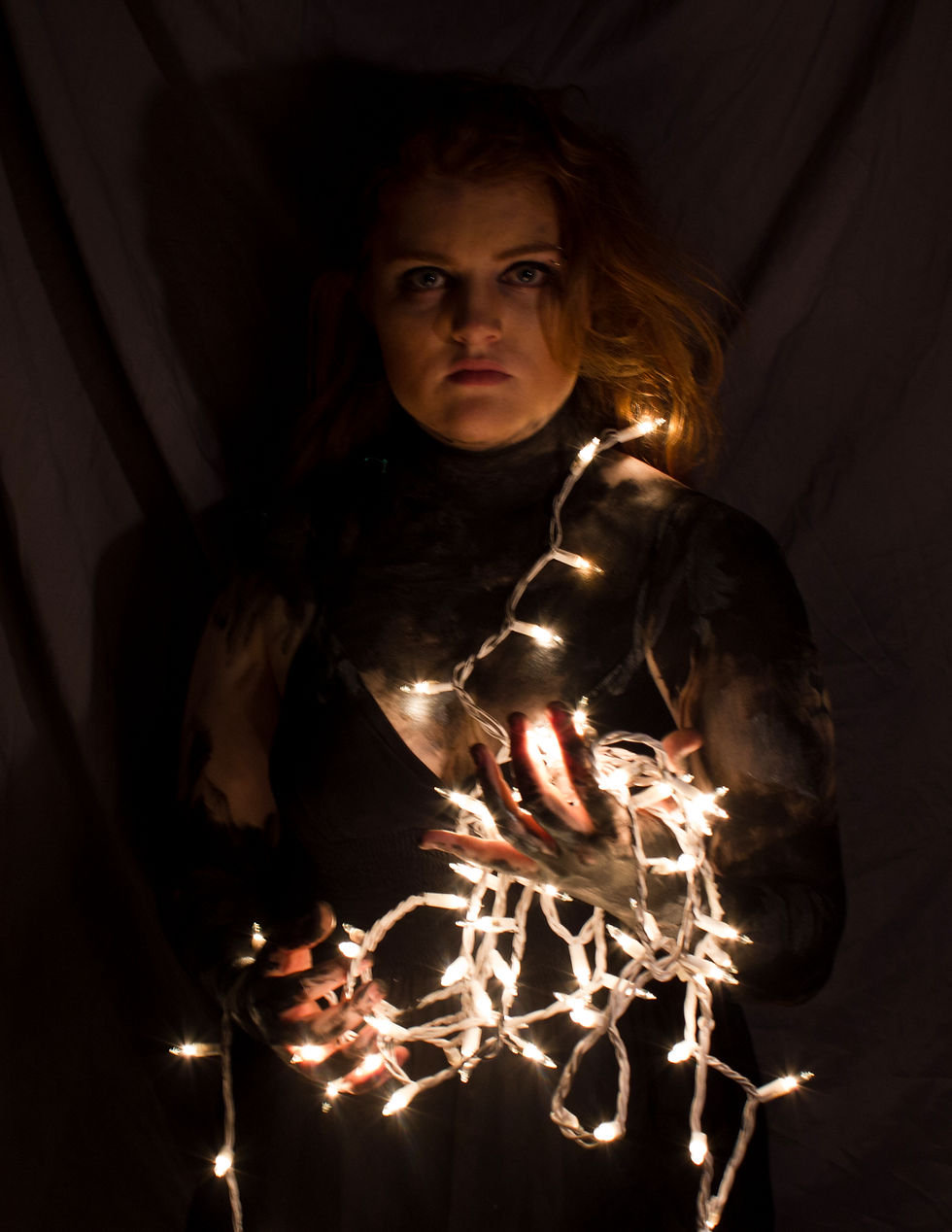


Caught, Digital photograph, 8.5x11" prints, 2016.
Caught (2016) visualizes an emotion that is not intially clear to the viewer nor the subject of the photographs. For anyone who has struggled with a pattern of thought or emotion, the coiling of the lights and the growing patches of black on the skin are familiar in what they symbolize. Something that starts as harmless or even fascinating can take hold and turn into a trap. This happens to the subject through the first several photographs in the series of nine, but the final three photographs show the subject’s realization that she needs to break out of the cycle. In the end, she does this, and confronts the viewer.
. . .
Phobos, Mixed Media including rigid wrap, paper, sponges, nails, feathers, fabric, beads, and other found objects, size varies. Largest butterfly wingspan and figure both approx. 18". 2015.
Phobos (2015) subverts the saying "butterflies in one's stomach" as inspiration for a darker piece about the propagation of fear. The figure has no facial features, hands, or feet and is covered with a gauzy, white layer. The hollow abdomen is oozing black that turns into progressively larger butterflies, which are a commentary on the way that fear can spiral and get worse. The figure is dwarfed by the butterflies. The piece is a visual representation of "phobos," a Greek word meaning fear. This also brings up the idea of irrational fears, phobias.
. . .


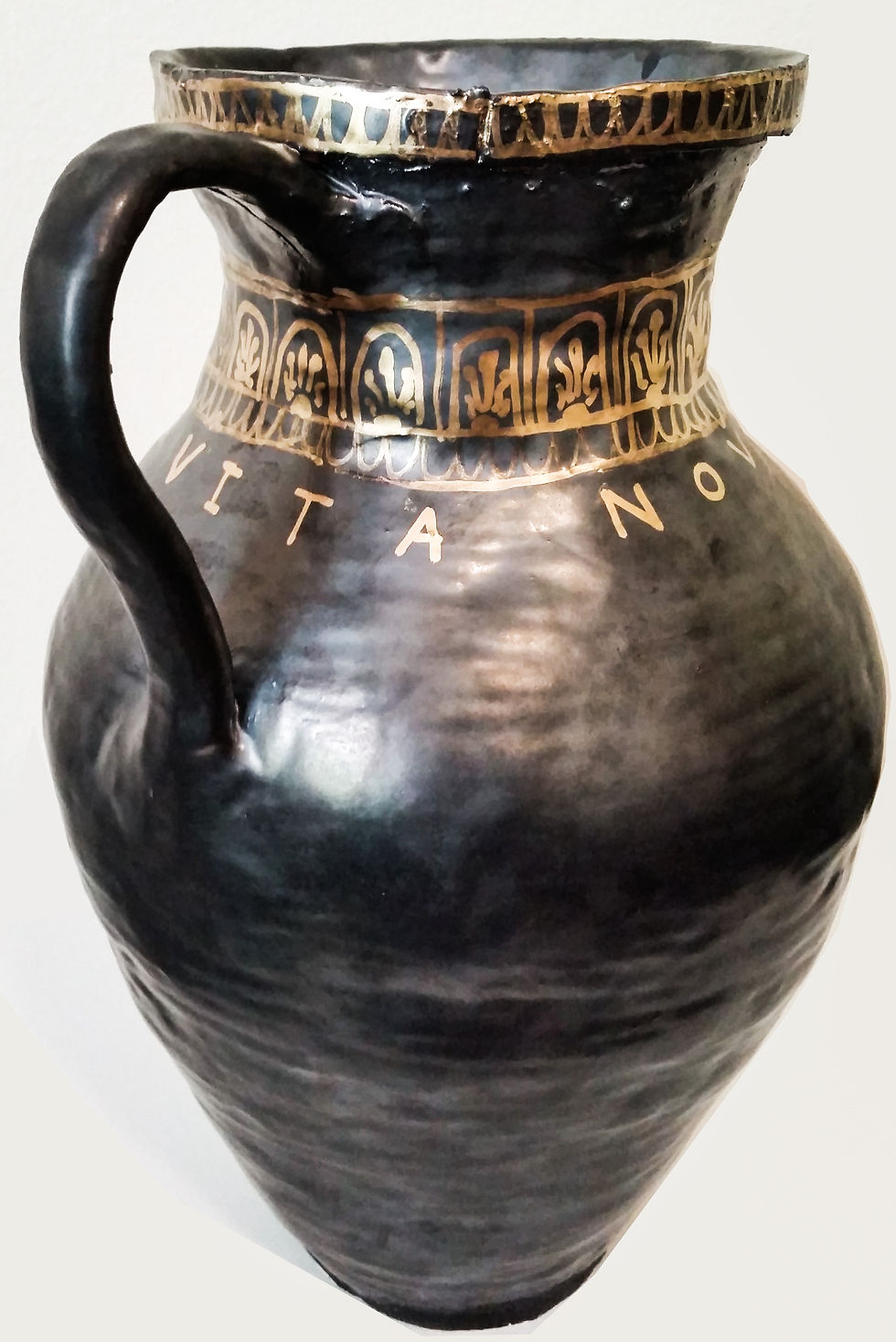
Scripps, ceramics, size varies by piece, 2016.
Scripps (2016) is a series of eight types of vessel for eight locations on the campus of Scripps College. The descriptions of the pieces (which you can access by clicking the thumbnails above) explain each. In short, there is an urn (~18" tall), lantern (12" tall), incense kit (~5x5x5"), teacup set (3.5x3.5x2" each), bowl (~10x10x5"), mug (~3x3x4"), pot (~8x8x5"), and decanter (~14" tall). Every piece was handbuilt. Pictures of the pieces in the locations coming soon.
. . .



(L to R) Juana Maria, Water Woman, Toypurina, Victoria Reid, Azusa, & Tar Pit Woman, Watercolor pencil and acrylic on paper. 9 x 12". 2016.
This commissioned project is a series of six illustrations intended for a children's book highlighting six notable women from the history of the Tongva tribe of the Los Angeles area.
. . .